
Guide
Clean support rooms for Tracy plants that run in shifts
On a working Tracy site, the floor runs on a production schedule while the breakroom, restrooms and locker area run on the shift clock. This guide walks you through mapping those support spaces, timing visits to the handovers and keeping your own site protocols in charge.
Start with the rooms every crew shares
Picture a Tracy distribution center as the early crew badges in. Within a few minutes the staff entrance, the locker area and the breakroom take more traffic than they will see for hours, and the pattern repeats at every handover after that. Those support spaces, more than the production floor, are where a cleaning plan on a working site earns its keep.
Begin by naming each support space on its own line: the front offices, the restrooms nearest the floor, the breakroom, the locker or changing area and any room crews use for briefings. Beside each one, write down who uses it and when it fills. A breakroom shared by two crews needs a very different rhythm from a front office that sits empty once the day shift goes home.
Leave the production floor, racking aisles and equipment zones off this list unless you want them handled as separate work. A firm line between support spaces and operational areas tells cleaners exactly where their route starts and stops, which is what our industrial and warehouse cleaning plans are built on.
Time visits to the gaps between crews
On a multi-shift site, the best window usually opens after one crew settles onto the floor and before its first break. Share your shift start and end times, your scheduled breaks and the hour the breakroom is fullest, and the visit lands in that quiet stretch instead of in the middle of a lunch rush.
Single-shift operations have an easier choice. An evening, night or weekend visit after the building empties gives cleaners every support room at once, with nobody waiting on a sink or a locker.
Sites that never fully close split the work in two. A day porter keeps restrooms stocked and bins emptied while crews are working, and the off-hours janitorial visit takes care of full restroom sanitation and the deeper routine tasks when traffic is at its lowest. Our guide to choosing a day porter or nightly janitorial lays out how the two divide the work.
What each support space needs on a visit
Restrooms on a working site get full cleaning and sanitation on every visit. Paper products, soap and liners are restocked at the same time, so the next crew never walks into an empty dispenser on its break.
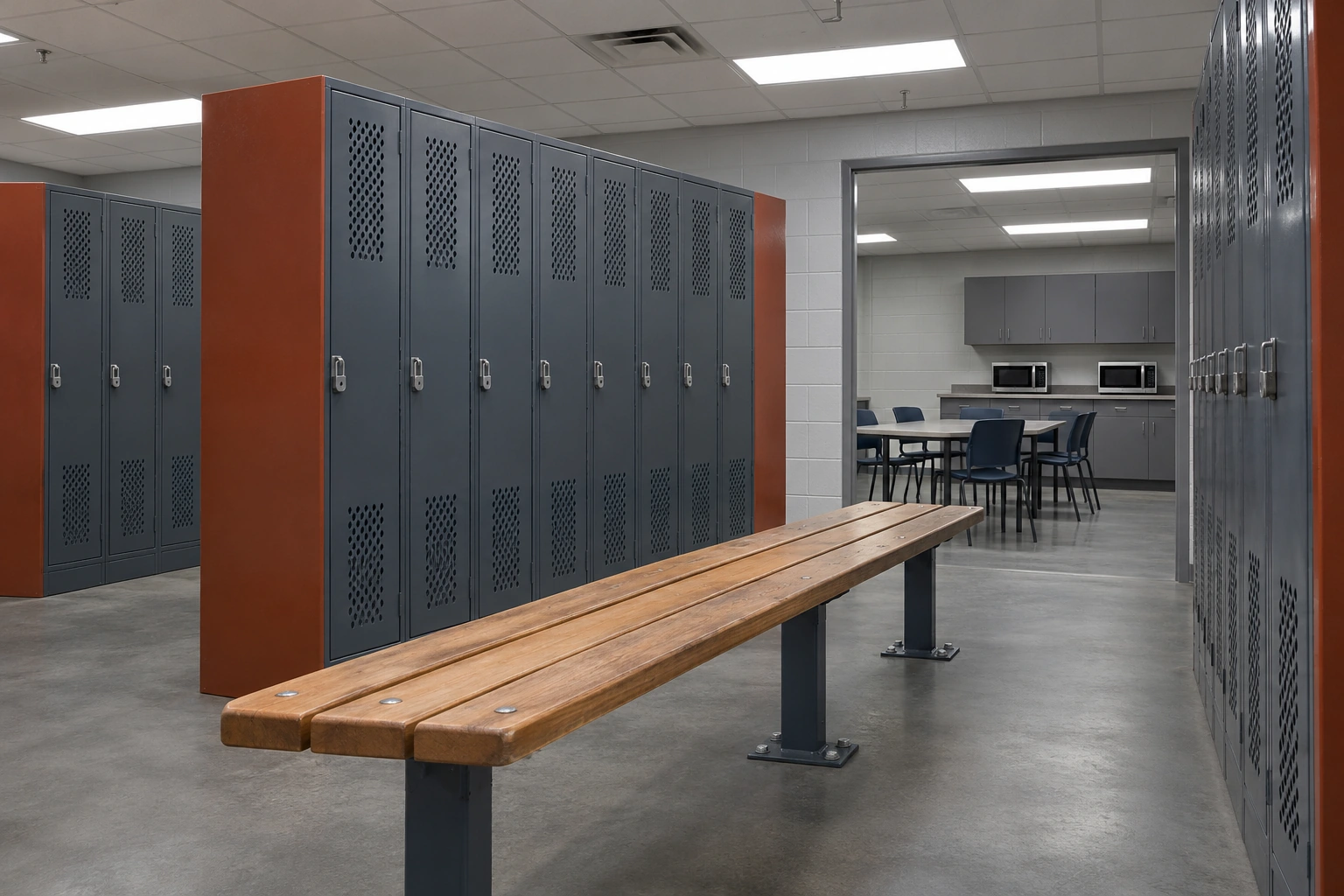
In the breakroom, the work centers on tabletops, counters, the sink and coffee station, and the door handles of every appliance crews share, followed by trash and recycling. Locker and changing areas get high-touch surface care on benches, door pulls and light switches, plus trash removal.
Front offices follow a routine close to office cleaning, with desks, shared surfaces, trash and recycling on their own interval. The entrance and the walk in from the parking lot set the tone for each shift, and exterior litter and parking-lot trash pickup can be added to a porter route.
Planning around production runs and shutdowns
Production schedules move. A rush order can add a weekend crew, and a planned shutdown can leave the support spaces nearly empty for days. Let the cleaning plan follow those changes: tell us when a run will add people so visits increase, and when a shutdown opens room for heavier work.
A shutdown is the ideal moment for periodic floor work. Hard floors in breakrooms and corridors can be scrubbed, recoated, polished or burnished while nobody walks on them, and carpeted offices can get hot water extraction with plenty of drying time before crews return. Our commercial floor care page explains how the method is matched to each surface.
When a shutdown also opens warehouse zones for a one-time deep clean, book that as its own visit. Keeping it apart from the recurring support-space routine makes both easier to plan and easier to review afterward.
Your site rules stay in charge
Every working facility has its own entry rules, and the cleaning plan operates inside them. Mark restricted areas on your floor plan, name the person who approves entry, and note any escort, sign-in step or protective gear your site requires of visitors.
Describe where forklifts and other moving equipment travel so the cleaning route stays out of their way. When cleaners only work in support spaces, these notes run short, but they still belong in the plan from the first visit.
A quote here always follows a look at the property in person, so the person who knows your shift pattern can show where crews gather, which doors stay locked and where supplies are kept. The cleaners who work your site are background-checked.
A few useful answers
Quick answers
How many breakroom visits does a multi-shift site need?
A breakroom shared by more than one crew usually needs daily cleaning, with a porter between visits where traffic stays heavy. One that serves a single shift often holds up well on a several-times-weekly schedule.
Can cleaning change when our production schedule changes?
Yes. Tell us about added crews, weekend runs or shutdowns ahead of time, and the visit frequency and windows are adjusted to match.
Who decides which areas cleaners can enter?
Your facility does. The contact you name approves entry, and the plan lists only the support spaces and zones you mark for cleaning.
When is the best time for floor work in a breakroom?
During a planned shutdown or a weekend with no crews on site, so scrubbed or recoated floors and extracted carpet have time to dry before people return.
Industries
Related industries
Services